CNC: Work hardening, and how it affects CNC machining
Work hardening is the process of a metal becoming stronger and harder by plastic deformation, due to changes in the crystal structure of the material.
When you bend a piece of wire back and forth a few times, it becomes harder to bend at the same point. This becoming ‘harder to bend’ is work hardening. Some metals like low-carbon steel, pure copper and aluminium can only be strengthened this way. They are deliberately work hardened by hammering, rolling or drawing. Jewellery wire of silver and gold is commonly work hardened.
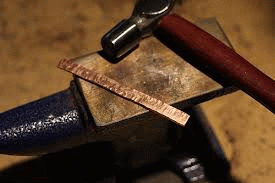
Copper being work hardened
In metal cutting, you can usually identify work hardening on the part visually – the cut surface appears shiny and slippery. A couple of big causes are:
1. Machining with a depth of cut that is too low. The workpiece gets compressed and springs back instead of being cut. Such repeated cuts cause repeated deformation and work hardening.
2. The tool’s cutting edge is not sharp, resulting in some of the material getting compressed instead of being sheared off.
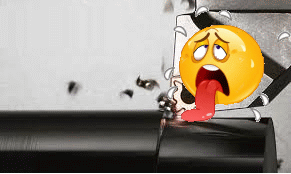
Work hardening makes machining difficult
Work hardening can occur when cutting any metal at all – plain carbon steel, stainless steel, titanium, etc. Its effect is to increase cutting forces, increase vibrations, reduce tool life and reduce part quality.
Action point
To avoid work hardening:
– Cut with sharp inserts / tools
– Use cutting parameters recommended by the tool manufacturer
– feed rate, depth of cut – Do not cut with a depth of cut less than 0.05 mm.
– In thread turning of stainless steel, ensure that the depth of cut is more than 0.08 mm. This can happen without your knowing, because the canned cycle reduces the depth of cut in each cut to keep the cutting load constant.
– Avoid dwells, avoid peck drilling
Pics. and Text source: CADEM NCyclopedia multimedia CNC training software.